

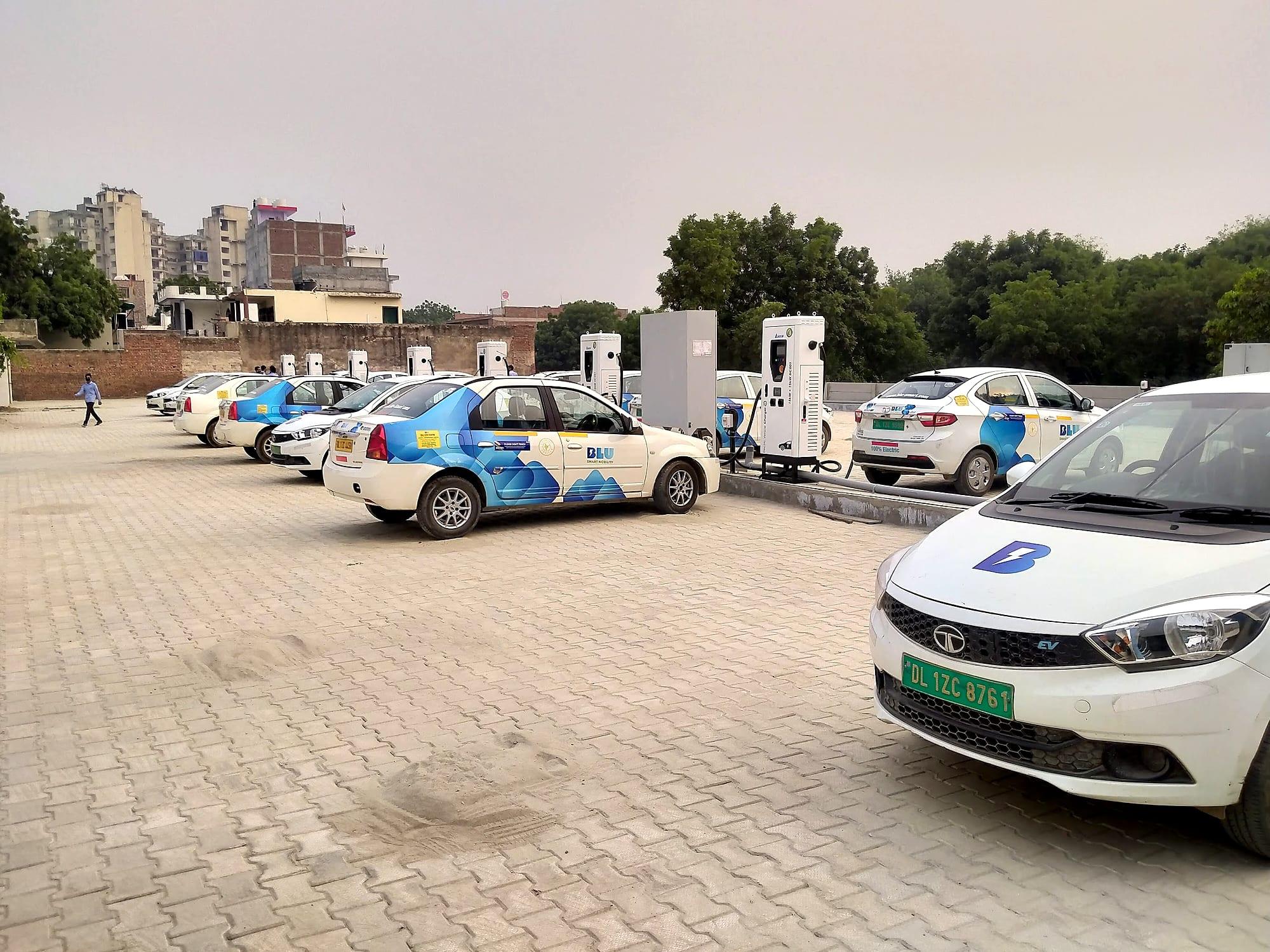
Start from the shift, not the charger
A commercial EV earns only when it is on the road. Depot planning should begin with the duty cycle: how many vehicles change shift at the same time, how far each runs per shift, and how long the operation can afford to have it plugged in. Those three numbers decide the DC/AC mix far more reliably than vehicle count alone.
For multi-shift cab and delivery fleets in NCR, DC fast charging with 30–45 minute turnarounds keeps vehicles in service between shifts, while AC bays (7.4–22 kW) handle overnight replenishment at lower cost.
Dedicated lanes and staging space
Queues are the hidden cost of shared charging. Reserved fleet lanes — like the CCS2 and Type 2 bays held for fleet partners at our Sector 86 and Sector 52 hubs in Gurugram — guarantee capacity at shift change. Parking buffer zones let the next vehicle stage without blocking a bay, and driver rest lounges make the wait productive.
Connector mix matters too: city cab fleets and last-mile cargo EVs often use GB/T or Bharat DC-001 (15–30 kW), while newer passenger EVs and buses need CCS2 at 60 kW and above.
Authentication and billing without friction
Drivers should never handle payment. RFID cards or telematics-based authentication start sessions automatically, sessions bill to a fleet wallet, and consolidated GST invoicing gives finance teams one clean monthly bill per entity.
Volume-linked kWh tariffs reward high utilization, and SLA-backed uptime with 24/7 on-site support protects the schedule. Alektrify can provide this from existing Gurugram hubs or as a custom depot built for a single fleet.