

Idle chargers are the industry’s quiet problem
India has added charging points quickly, but a large share of low-power standalone chargers sit idle for most of the day. A charger that delivers a handful of sessions a week cannot cover its own electricity connection, let alone its hardware and maintenance — and owners quietly stop maintaining it, which drives drivers away for good.
The economics of charging are the economics of utilization. Every percentage point of daily use spreads the fixed cost of transformers, civil works and chargers across more kWh delivered.
Anchor demand changes the maths
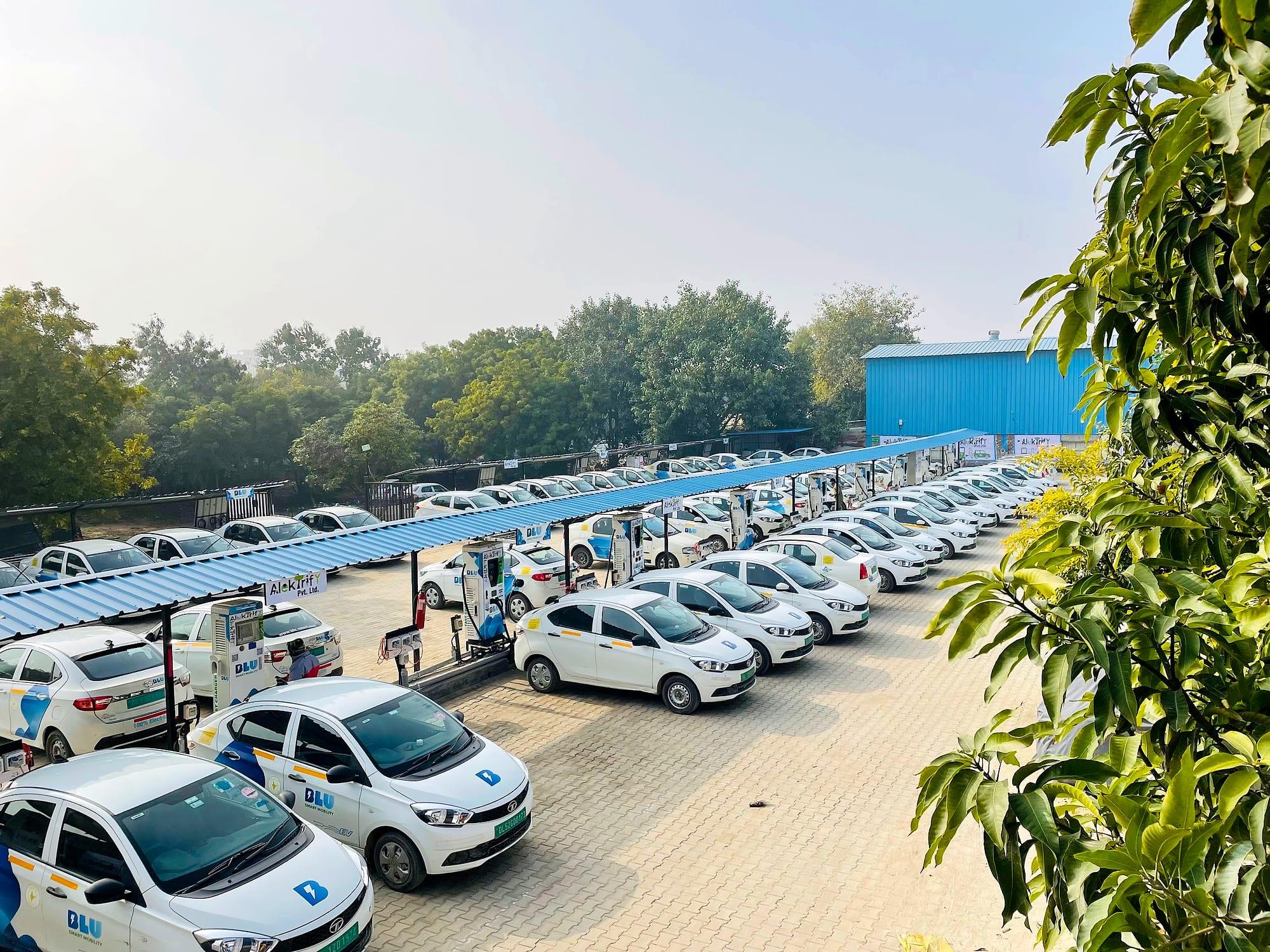
Alektrify hubs are built differently: public fast charging is co-located with contracted commercial fleet demand. Cab, last-mile delivery and shuttle fleets charge on predictable shift patterns, while public drivers fill the gaps in between. The result is consistent daily kWh throughput rather than a hope that walk-in drivers will appear.
At our flagship Gurugram hubs this model sustains 72%+ average utilization — the benchmark we use when modelling new sites and the reason project partners can plan around a ~36-month breakeven.
What a high-utilization hub needs
Utilization is designed in, not hoped for. It takes enough grid capacity — often a dedicated HT/LT transformer — DC fast chargers from 60 to 120 kW for quick turnarounds, AC bays for overnight dwell, staging space so fleet vehicles never block public bays, and 24/7 on-ground support so the hub never closes.
It also takes operations: OCPP telemetry, remote diagnostics and field engineers who keep uptime above 99%. A busy hub that goes down loses more revenue per hour than an idle one — so uptime and utilization have to be engineered together.